Mercato Testaccio or Campo de' Fiori: Where a Testaccio Food Tour Shops
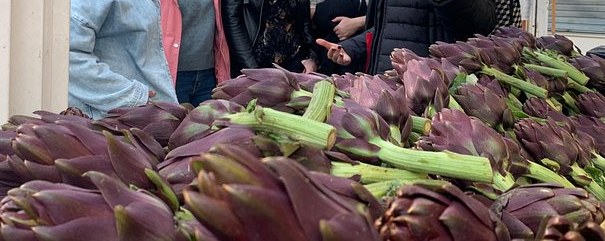
The short answer. Mercato Testaccio is a covered rione market with a hundred stalls and a lunch counter, open Monday to Saturday 7:00 to 15:30, where Romans shop. Campo de' Fiori is an open-air square in the centre that clears by lunchtime and sells as much to visitors as to cooks. A guided morning at one is a food shop; at the other it is a square with history and a few stalls.
Two Roman markets appear again and again on the walks gathered here, and they are not interchangeable. One sits in a working quarter on the far side of the Aventine; the other sits three minutes from Piazza Navona. Choosing between them decides what kind of morning you get, and the Testaccio market tours listings split neatly along that line.
Side by side
| Mercato Testaccio | Campo de' Fiori | |
|---|---|---|
| Where | Via Lorenzo Ghiberti, rione Testaccio | Piazza Campo de' Fiori, rione Parione |
| Shape | A covered 2012 building, stalls in ranks | An open square with stalls under awnings |
| Hours | Mon–Sat 7:00–15:30, published | Mornings; the square clears around lunchtime |
| Size | About a hundred stalls | A few dozen |
| Who shops it | The neighbourhood | A mix of locals and visitors |
| Lunch on the spot | Yes, several counters | Bars and restaurants round the square |
| Underneath | An excavated Roman warehouse | The remains of the Theatre of Pompey nearby |
What a guided morning does at Testaccio
It shops. An hour to an hour and a half inside the building, counter by counter: produce, cheese, the butcher, the cooked-food stalls, with a tasting at each and time to buy. The market walks here run to fourteen tastings across eight family-run places, with a sit-down pasta course in the middle. You come away with a working knowledge of a Roman larder: what pecorino romano is for, why guanciale is not pancetta, what is in season this week.
It is also quiet, in the sense that nobody is there to be seen. The full picture is on the Mercato Testaccio page.
What a guided morning does at Campo de' Fiori
It passes through. Campo de' Fiori is a stop of fifteen to twenty-five minutes on a longer route that takes in the Jewish Ghetto and Trastevere. It works as a scene-setter rather than a shop: the square, the statue of Giordano Bruno, a stall or two, then on to the tastings. The walks that use it are street-food walks, and they are good at that. They are simply not market walks.
One useful detail, and it is on the listing rather than hidden: the afternoon departure of one Campo de' Fiori walk skips the market altogether, because the stalls have packed up, and substitutes a grocer and an aperitivo. If the market is the reason you booked, take the morning departure.
Which walks shop which
- Inside Mercato Testaccio: the small-group market morning, the all-inclusive market tour that crosses Ponte Testaccio, the private two-hour market walk, the market and pyramid walk, and the golf-cart tour that parks for an hour. They are gathered on the Testaccio food market tours page.
- Through Campo de' Fiori: the fifteen-tasting Ghetto and Trastevere walk, the street-food walk from Piazza San Simeone, the tasting tour from Piazza Navona, and two more. They are on the Rome street food tours page.
Hours, and the trap in them
Mercato Testaccio publishes its hours: Monday to Saturday, 7:00 to 15:30, and nothing on Sunday. Campo de' Fiori publishes nothing formal, because it is a square rather than a building, and in practice the stalls are there in the morning and gone by early afternoon.
That difference is the trap. A walk booked for four in the afternoon that lists Campo de' Fiori will show you a square with restaurant tables on it, which is pleasant and is not a market. A walk booked for nine thirty will show you the stalls. Nothing about the listing tells you that; the hour does.
If you only have one morning
Take Testaccio. It is the market that will teach you something, and the walk that ends with you sitting down. Campo de' Fiori is worth twenty minutes on your own on the way to somewhere else, and it is free.
If you have a morning and an evening, do both: Testaccio at half past nine, and a Trastevere street-food walk at six that takes in Campo de' Fiori on the way. The case either way is set out in Testaccio or Trastevere.
What is actually sold at each
The difference shows in the stalls. Mercato Testaccio has produce, butchers, fishmongers, cheese counters, bakers, a wine seller, cooked-food counters and, because it is a neighbourhood market, shoes. You can buy a week's food there and eat lunch standing at a counter while you do it.
Campo de' Fiori sells flowers, fruit and vegetables, and a good deal of packaged food aimed at people carrying it home in a suitcase. Dried pasta, jars, spice mixes, limoncello. Some of it is excellent and some of it is souvenir, and a guide is genuinely useful for telling one from the other.
The Ghetto, and why it keeps appearing
Most walks that stop at Campo de' Fiori carry on into the Jewish Ghetto, three minutes away across Via Arenula. That is the real reason to take one. The Ghetto is where carciofo alla giudia comes from: the artichoke flattened and fried twice until the leaves open like a flower. Fried courgette flowers and salt-cod fillets in batter come from the same kitchens. Between January and May those artichokes are local and at their best. What to eat in Testaccio takes each of them in turn.
Testaccio has no equivalent single dish in the way the Ghetto does. What it has is the four pastas, and the larder they are built from, which is a different kind of claim and a better one if you cook.
Getting to each
Mercato Testaccio: metro line B to Piramide, then about six hundred metres on the flat, or trams 3 and 8 to Zabaglia. Campo de' Fiori: no metro, a walk from Largo di Torre Argentina or across Ponte Sisto from Trastevere. Meeting points for every walk are mapped on where Testaccio food tours meet.
A market walk on each side of the river

Rome Food Tour: Small-Group Testaccio Market & Local Tastings
Three and a half hours in Testaccio, an hour and a half of it inside the market.
From $79 per person
Check Availability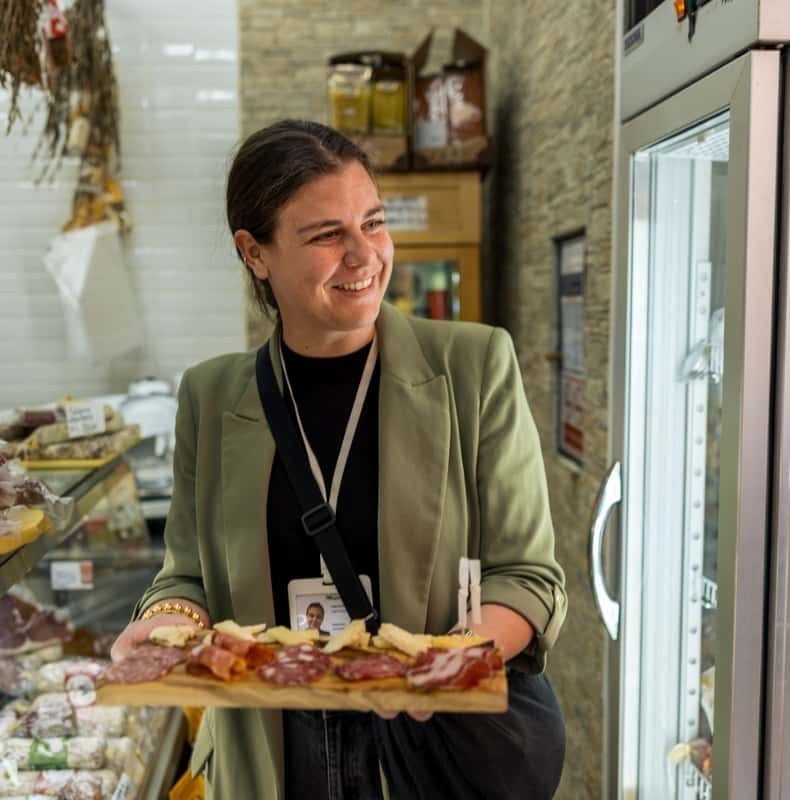
Food & Wine Tour: 15 Local Tastings in Trastevere & Ghetto
Fifteen tastings in two hours, the market only on the morning departure.
From $84 per person
Check Availability
Rome: Trastevere & Campo de' Fiori Street Food Walking Tour
Campo de' Fiori and Trastevere on foot, food in the fare, drinks extra.
From $48 per person
Check AvailabilityNext: decide which market you want, then book the hour that has it open. Or start from a Testaccio food tour shortlist. Every fare sits side by side on Testaccio Food Tours.