Testaccio Food Tours or Trastevere: Which Rome Food Walk to Book
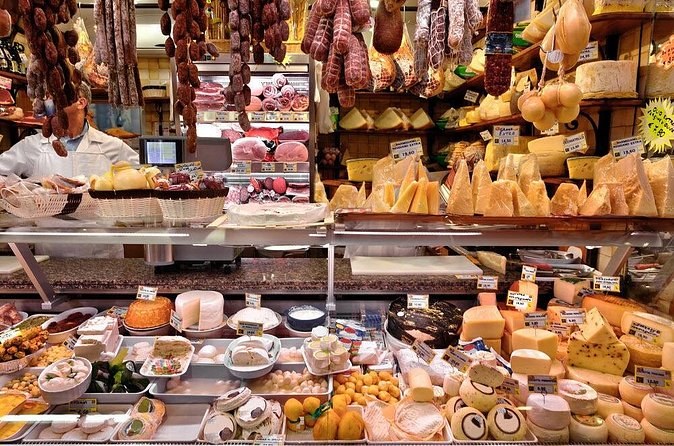
The short answer. Take Testaccio if you want a market, a working quarter and the story behind four Roman pasta dishes, and take it in the morning because the market shuts at half past three. Take Trastevere if you want an evening, a wine cellar and a table, and expect to pay a little more for the sit-down course. If you have both a morning and an evening, do both — they are twenty minutes apart.
This is the decision the whole of this site turns on, and almost nothing sold online will make it for you. Search for a Rome food tour and you get both quarters mixed together on one results page, sorted by rating, with nothing to tell you that one walk spends its morning inside a covered market and the next spends its evening in a cellar across the river. They are not competing products. The Rome street food tours page gathers the ones that go inside the market, and this guide explains why you might want that instead of the other thing.
What is actually different about the two quarters
Testaccio is rione XX: a flat grid of 1880s blocks laid out on the plain of Rome's ancient river port, built as housing for the men who worked the wharves and, later, the city slaughterhouse. It has a covered market at its centre with about a hundred stalls, a hill made of broken Roman oil amphorae at its southern edge, and almost no tourists. It is where four of Rome's famous pasta dishes were codified, and where the offal cooking the city is known for comes from. The history page sets that out properly.
Trastevere is older, prettier, and across the river: a medieval tangle of lanes on the west bank, with ivy on the walls, a basilica with twelfth-century mosaics, and tables out on the cobbles from six in the evening. It has no market of its own to speak of; what it has is restaurants, wine bars, bakeries and an atmosphere the Testaccio grid simply does not have.
Which one has the food you came for?
Both, and in different forms. The dishes are largely the same across the river — supplì, pizza bianca, carbonara, gelato — because this is one city. What differs is the setting they arrive in and the argument that comes with them.
In Testaccio the food arrives with a provenance. You see the pecorino on the counter before you eat it grated over pasta, and the guide can point at the building where the quarter's offal cooking started. In Trastevere the food arrives with a room: a norcineria that has been there for generations, a cellar older than most of the churches, a table held for you at eight o'clock on a Friday.
The two kinds of morning, side by side
| A Testaccio walk | A Trastevere walk | |
|---|---|---|
| When it runs | Mornings, because the market does | Afternoons and evenings, mostly |
| The centrepiece | Mercato Testaccio, 30 min to 1 hr 30 inside | Four or more family-run addresses |
| Typical fare | $79 to $373 a head | $45 to $120 a head |
| Group size | Six to fifteen | Eight to fifteen, or private |
| Sitting down | A pasta course on the longer ones | Usually, and often dinner |
| Wine | A glass or three named wines | Often free-flowing |
| Other visitors | Few | Many |
| What you learn | A larder, and where the dishes came from | A quarter, and where to eat in it |
Is one better value than the other?
Per hour, the cheap Trastevere street-food walks win: $48 a head buys two and a half hours with a licensed guide and the food in the fare. Per meal, the longer walks on either side of the river are closer than they look, because a sit-down course is in the fare and you are not paying for dinner afterwards.
The Testaccio market mornings sit in the middle at $79 to $117 and give you the most food of anything gathered here: fourteen tastings across eight places on the longest one. If value means quantity, that is the answer. What a Testaccio food tour costs takes the fares apart line by line.
How much walking is involved on each?
Testaccio is flat and compact: you can cross the whole rione in twenty minutes, and the market walks rarely cover more than a kilometre and a half. One of them states that distance outright. Trastevere's lanes are cobbled, narrow and uneven, and the routes cross a bridge at least once, so a Trastevere evening is more work than a Testaccio morning even though both are short.
If somebody in your party cannot walk far, the golf-cart tours drive between stops and collect you from your hotel, and both spend time in Testaccio. They are on the private tours page.
What about children?
Testaccio's flat streets and short routes suit children better than Trastevere's cobbles, and the market itself is more interesting to a nine-year-old than a wine cellar. Against that, one Trastevere walk publishes the most explicit family pricing here — reduced fares under ten, free under five with a ticket — and one Testaccio market morning sets its adult band at fifteen. Read the ages on the card; the post on taking children lists them.
Where the walks meet, on each side
In Testaccio: Piazza di Santa Maria Liberatrice by the war memorial, the fountain in Piazza Testaccio, the Piramide metro exit, and a buzzer at Via Galvani 4. Two meet outside the rione and walk in.
In Trastevere and the Ghetto: Piazza Mastai, Piazza Farnese, Piazza del Biscione, Piazza San Simeone, Piazza Benedetto Cairoli, Via di Ponte Quattro Capi and the obelisk by San Bartolomeo on Tiber Island. Two more begin near Piazza Navona. All of them are mapped on where the tours meet.
The day of the week matters on one side only
Mercato Testaccio publishes its hours as Monday to Saturday, 7:00 to 15:30, with nothing on Sunday. That governs every Testaccio market walk. Trastevere's evening walks run seven days a week, because a restaurant does not care what day it is. If your only free day is a Sunday, the decision is made for you. The best time to visit sets out the week.
Can you do both in one day?
Comfortably, and it is the best answer if you have the appetite. A market morning starting at half past nine finishes between noon and one. A Trastevere evening walk starting at six gives you five hours in between for the cemetery, the pyramid, a nap or all three. The two quarters are about twenty-five minutes apart on foot, or a short ride on tram 3.
What does not work is a long walk followed by another long walk. Fourteen tastings and a pasta lunch followed by twenty tastings and free-flowing wine is not a good day, whatever it looks like on paper.
Which to book if you have one shot
Take Testaccio. The reason is not that the food is better — it is that the walk teaches you something you can use for the rest of the trip. After a morning at the market you know what pecorino romano is for, why guanciale is not pancetta, what is in season, and how to order a hundred grams of anything. That changes every meal you eat afterwards, including the ones in Trastevere.
Take Trastevere instead if you want an evening rather than a morning, if you are travelling with somebody who will not enjoy a market, or if your budget points at the cheapest fares here, which are on the street food tours page.
Frequently asked questions
What is the difference between a Testaccio food tour and a Trastevere one?
Is Mercato Testaccio open every day?
How much does a Testaccio food tour cost?
How much food is on a food tour — is it a meal?
Are these tours suitable for children?
Can I fit a Testaccio food tour and the Colosseum into one day?
Every fare on both sides of the river sits side by side on Testaccio Food Tours.
One walk on each side of the river

Rome Food Tour: Small-Group Testaccio Market & Local Tastings
Three and a half hours in Testaccio, an hour and a half of it inside the market.
From $79 per person
Check Availability
Rome: Trastevere & Campo de' Fiori Street Food Walking Tour
Campo de' Fiori and Trastevere on foot, food in the fare, drinks extra.
From $48 per person
Check Availability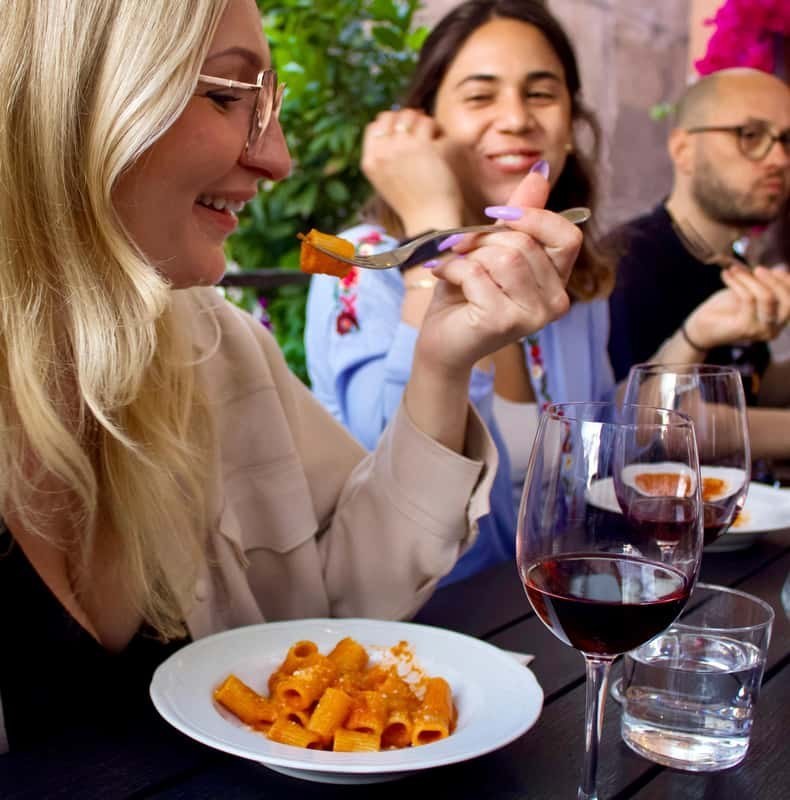
Rome: Small-Group Guided Food Tour with Wine in Trastevere
Four Trastevere addresses with tables booked and wine at each.
From $88 per person
Check Availability