Inside Mercato Testaccio: A Testaccio Food Market Walk, Stall by Stall
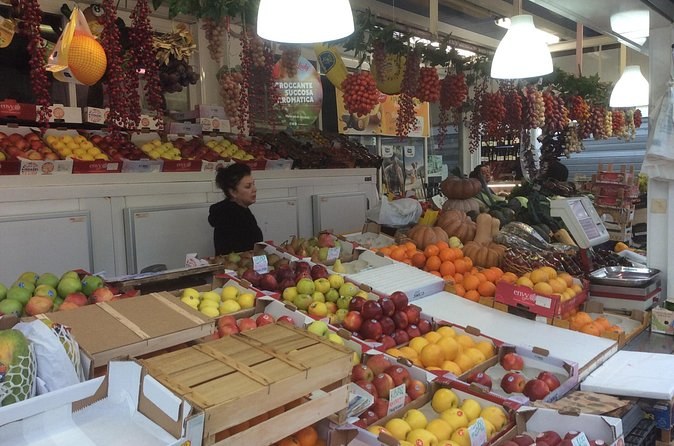
The short answer. Mercato Testaccio has about a hundred stalls under one 2012 roof on Via Lorenzo Ghiberti, with four public entrances and a Roman storage warehouse excavated underneath it. Produce and butchers at one end, cooked food and street food at the other, and everything in between. Come between nine and eleven, bring small notes, and walk the whole aisle once before you buy.
Most visitors walk into Mercato Testaccio, see a modern shed, and walk out again. That is a mistake, and it is the mistake a guided morning exists to prevent: what is old here is the trade, not the roof. This post takes the building apart — the entrances, the layers underneath, and what each kind of stall is actually for — so that you can shop it yourself. The Testaccio market tours at the end are the walks that go inside.
The building, and the square it left
The market opened on 2 July 2012, designed by the architect Marco Rietti, on the site of the old Campo Boario. Before that it traded in the open air on Piazza Testaccio, which is why that square still feels like the middle of the rione and why guided walks still gather at its fountain. The new building is long and low, steel and glass, roofed but open along the sides, with the stalls in ranks and a wide central aisle.
It is worth knowing that before you arrive. Some visitors come expecting a nineteenth-century market hall and are briefly disappointed; then they see the counters.
Four doors, and which one to use
The registered address is Via Lorenzo Ghiberti, and there are public entrances on three more streets. Which you take changes what you meet first.
| Entrance | Comes from | What is nearest |
|---|---|---|
| Via Lorenzo Ghiberti | Piazza Testaccio | The registered address; the main aisle |
| Via Beniamino Franklin | The tram stop side | Handy from trams 3 and 8 |
| Via Alessandro Volta | The Via Marmorata side | The walk down from the metro |
| Via Aldo Manuzio | The Mattatoio end | Nearest the cooked-food counters |
The Roman warehouse underneath
Digging the foundations turned up a Roman horreum, a storage warehouse, with amphorae in it, excavated under the direction of the archaeologist Claudio Mocchegiani Carpano. The market's own site calls the amphora the historical symbol of the district, and it is right to: the jars stored here are the same kind that were broken and stacked half a kilometre away to make Monte dei Cocci.
The market normally opens the archaeological area for free guided visits of about forty-five minutes on open days, in groups of up to twenty. Those visits are suspended at the moment while the rooms are refurbished. Check the market's own page rather than counting on one.
A hundred stalls, in four kinds
The market's own line is 100 banchi, 100 storie, 1000 prodotti. They sort into four groups, and knowing which is which is most of what a guide gives you.
- Produce. Loudly seasonal. Romanesco artichokes stalk-up from January to May, puntarelle through the winter, courgette flowers and tomatoes in summer. This is where you see what the Roman kitchen is working with that week.
- Butchers, fishmongers and cheese. The counters that supply the quarter's kitchens, including the cuts the rest of the city passes over. Pecorino romano and guanciale are both bought here, and both are what a Roman pasta needs.
- Cooked food and street food. Sandwiches built from the morning's braises, supplì, pizza by the slice, roast things. This is the half a food tour spends its time at.
- Everything else. Bread, wine, household goods, clothes, shoes. A rione market is not a food court, and the shoe stall beside the cheese counter proves this one still belongs to the neighbourhood.
How to shop it without a guide
Walk the whole aisle once before you buy anything. Ask for un etto — a hundred grams — when you want cheese or ham, and expect a taste before you commit. Point rather than translate. Carry small notes. If you want to cook, ask what is good today and you will be told honestly, because the stallholder would rather sell you the right thing twice.
You can also make a whole lunch here with no reservation. The cooked-food counters sell by the piece, most have a shelf to stand at, and nobody minds you eating where you bought. A supplì, a slice of pizza bianca and something braised in a roll is the standard order. What to eat in Testaccio explains each of them.
What a guide adds that you cannot buy
Sequence, quantity and the names. Eight or so counters in the right order, enough of each to know whether you like it, and somebody to say what you are eating and why it is made that way. The market mornings gathered here run to fourteen tastings across eight family-run places, with a sit-down pasta course in the middle and gelato to close.
They also get you served. A stallholder at eleven on a Saturday has a queue of people who live here; a guide who has worked with them for years does not join it.
What to buy, counter by counter
If you are shopping rather than tasting, five things are worth carrying out of this building.
- Pecorino romano. Hard, salty sheep's-milk cheese, sold by the wedge. It is what goes over cacio e pepe, gricia, amatriciana and carbonara, and it keeps for weeks.
- Guanciale. Cured pork cheek, fattier and more perfumed than pancetta, sold by the piece at the butchers. Three of those four pastas need it.
- Whatever is piled highest on the produce stalls. Artichokes stalk-up from January to May, puntarelle through the winter, courgette flowers in summer.
- A supplì, eaten standing. Two euros, and the fastest introduction to Roman street food there is.
- Bread from the bakery counter. Pizza bianca by weight, torn rather than sliced, and split with mortadella if you want the market's own sandwich.
Prices are marked per kilo or per etto. Ask for an etto and you will get a hundred grams, which is about right for two people. The best time to visit says what is in season when.
Where the market sits in a morning
The market is the middle of a walk, not the whole of it. The routes that go inside also take in Piazza Testaccio, the old slaughterhouse gates on Piazza Orazio Giustiniani, and the flank of Monte dei Cocci on Via Nicola Zabaglia, before sitting down to a pasta course somewhere in the grid. One of them starts outside the rione altogether, at Roma Trastevere station, and crosses Ponte Testaccio to get here.
That matters because the market on its own is forty minutes of looking. The quarter around it is what turns it into a morning, and things to do in Testaccio sets out the rest of the circuit.
Hours, and the day not to come
Monday to Saturday, 7:00 to 15:30. No Sunday hours are published and in practice a Sunday morning here is a shuttered block. Traders are set up from seven, produce is at its best before ten, and the cooked-food counters get busy from about noon with people who work nearby. A walk starting at half past nine catches both halves of that. Full detail is on the Mercato Testaccio page.
The walks that go inside the market

Rome Food Tour: Small-Group Testaccio Market & Local Tastings
Three and a half hours in Testaccio, an hour and a half of it inside the market.
From $79 per person
Check Availability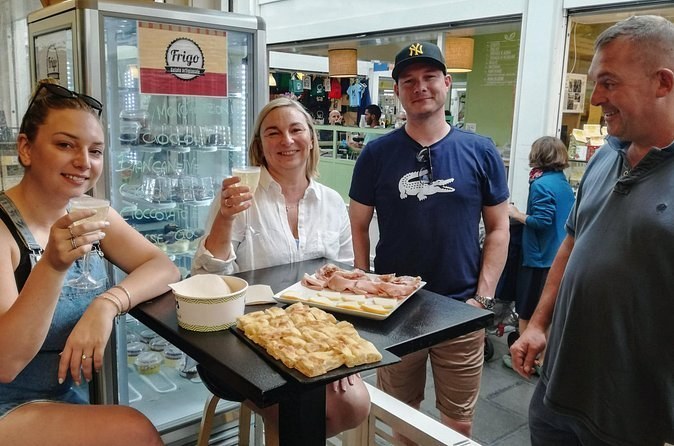
Testaccio Quarter Market and Pyramid Food and Sightseeing Tour
The pyramid, the cemetery, Monte dei Cocci and the market in one loop.
From $373 per person
Check Availability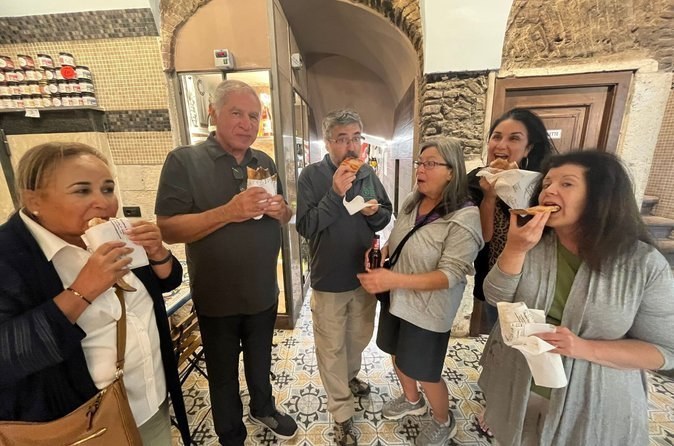
Rome: Lip Smacking 4 hours Foodie Tours in golf cart
A private cart from your hotel, with a full hour at Mercato Testaccio.
From $121 per person
Check AvailabilityNext: see how long each walk actually spends inside the building. Or start from a Testaccio food tour shortlist. Every fare sits side by side on Testaccio Food Tours.