When to Take a Testaccio Food Tour: Market Days, Seasons and August
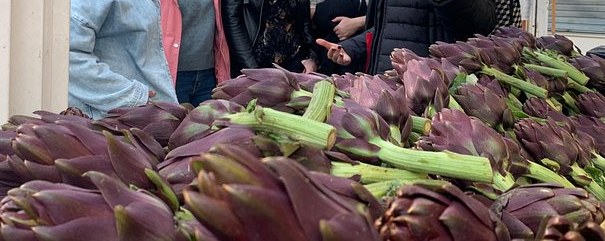
The short answer. Tuesday to Friday morning, between nine and eleven. The market opens Monday to Saturday, 7:00 to 15:30, and never on Sunday. March and April are the best months, for the artichokes. Avoid the fortnight around 15 August if you can, and take a morning rather than an evening walk in July and August.
Nothing about a Rome food tour is weather-dependent in the way a boat day is. What decides whether you get a good one is the day of the week, the hour of the morning and what is on the stalls that month. All three are knowable in advance, and none of them appears on a booking page. The Testaccio food tour listings run year round; this guide says when to put them in your calendar.
The market's six-day week
Mercato Testaccio publishes its hours as Monday to Saturday, 7:00 to 15:30, and lists no Sunday hours at all. Everything follows from that. The guided walks that go inside run in the morning, six days a week, and the ones that spend an hour or more there start between 9:00 and 10:30.
If Sunday is your only free morning, take a Trastevere evening walk or the cooking class, both of which run regardless. The Mercato Testaccio page has the market's own detail.
Which day of the week is best?
Tuesday to Friday. Saturday is the rione's own shopping morning: the aisles fill with people buying rather than tasting, which is atmospheric and slow, and a group of twelve moves badly through it. Monday is quieter than the rest but some stalls restock rather than trade.
If your dates are fixed and Saturday is what you have, take a private walk rather than a shared one — a guide with two people can thread a crowded market in a way a guide with fifteen cannot.
Morning or evening?
The division is clean and it is set by what is open. Market walks are morning walks. Wine walks and street-food evenings run from late afternoon into the night, when the tables come out across the river and the cellars open. One Trastevere walk is sold specifically at twilight.
In July and August take the morning ones early and the evening ones late, and skip the middle of the day. From October to April there is no bad hour.
When are the artichokes?
The Carciofo Romanesco del Lazio IGP is harvested from January through May, at its best from early March to late April, and it was the first Italian product to be granted EU protected status. In that window the fried artichoke on a Ghetto walk and the braised one in a Testaccio trattoria are both local and both at their peak.
Outside it they are neither. If you are choosing between spring and autumn on food grounds alone, this is the reason spring wins.
And the puntarelle?
December to April, reaching Rome's stalls from January. Puntarelle are the shoots of a chicory grown for them, stripped into curls in iced water and dressed raw with anchovy, garlic and vinegar. A market morning between January and March will show you a stall doing nothing else, and it is one of the better things to watch in the building.
Winter also suits the heavier end of the repertoire — oxtail, tripe, the braises — which is what the trattoria stops lean on from November.
What happens in August?
Ferragosto falls on 15 August and it is customary, though not compulsory, for family-run Roman businesses to close for a week or more around it. Some of the trattorias and counters on these routes will be among them. Operators substitute stops rather than cancel, so a walk booked for mid-August will run — it may simply eat somewhere else.
Book it anyway and ask. Every listing here has a notes field; ask which stops are affected and take the morning departure. The cooking class and the market walks are the least affected, because the market itself stays open.
Is the summer heat a problem?
At midday, yes, and the walks are mostly outdoors between stops. The market is under a roof and most of the tasting stops are indoors, so the exposure is the walking rather than the eating. Take a 9:00 or 9:30 departure in July and August, carry a refillable bottle — two operators ask you to — and use Rome's street fountains, which run cold all summer.
The golf-cart tours are the cooler option if the heat is the concern: you move between stops with air going past you rather than on foot.
What about rain?
These walks run in it. Mercato Testaccio is covered, most stops are indoors and the walking between them is short; one operator states plainly that its tour operates in all weather and asks you to dress for it. If the forecast is poor, the market mornings and the cooking class are the driest things gathered here.
The year in one table
| Months | On the stalls | What to book |
|---|---|---|
| January–February | Puntarelle, first artichokes | A market morning; quiet streets |
| March–April | Artichokes at their best | Anything, and this is the peak |
| May | Last artichokes, courgette flowers | A market morning before the heat |
| June–July | Tomatoes, courgette flowers | Early mornings or evening walks |
| August | Full summer produce | A morning walk; ask about ferie closures |
| September–October | The heat breaks; mushrooms and chestnuts | Anything; the best walking |
| November–December | Winter greens, puntarelle from December | Trattoria stops and braises |
Nothing in that table is a weather forecast. No official meteorological source publishes a month-by-month table for Rome this site could cite, so the months are described by what is on the stalls and what is open, which is what actually changes the walk. The best time to visit Testaccio carries the same calendar in more detail.
Does the time of day change what you eat?
Yes, more than the month does. The market's produce stalls are at their best before ten and the cooked-food counters get busy from about noon, so a walk starting at half past nine catches both. An afternoon walk in the centre will find Campo de' Fiori packed up, which is why one operator substitutes a grocer and an aperitivo on its afternoon departure and says so.
In the evening the calculation reverses. The cellars open, the tables come out, and the sit-down course that makes a walk into a dinner is only really available after six. If you want both halves of that, take a market morning and a Trastevere evening on different days rather than stacking them.
What about Christmas and Easter?
The market keeps its published hours through most of the year, but the Non-Catholic Cemetery closes on 1 and 6 January, for two weeks in mid-August and on 8, 24 to 26 and 31 December, which is worth knowing if you were planning to pair the two. Trattorias close individually around the holidays rather than to a rule.
Easter week is busy everywhere in Rome and the food walks fill earlier than usual. Book further ahead than the usual week, and take a weekday morning rather than the Saturday.
When to actually book
About a week ahead. The caps here run from six to twenty, several listings are marked as likely to sell out, and the market mornings go first. Almost every fare cancels free up to 24 hours before, so booking early on a movable date costs you nothing. Two fares are final sales and say so on their cards.
Frequently asked questions
Is Mercato Testaccio open every day?
When is artichoke season in Rome?
What happens in Testaccio in August?
Do these tours run in the rain?
Do I need to book a Testaccio food tour in advance?
What should I wear and bring on a Testaccio food tour?
Pick a date and a walk on Testaccio Food Tours.
Walks that work whatever month you are here

Rome Food Tour: Small-Group Testaccio Market & Local Tastings
Three and a half hours in Testaccio, an hour and a half of it inside the market.
From $79 per person
Check Availability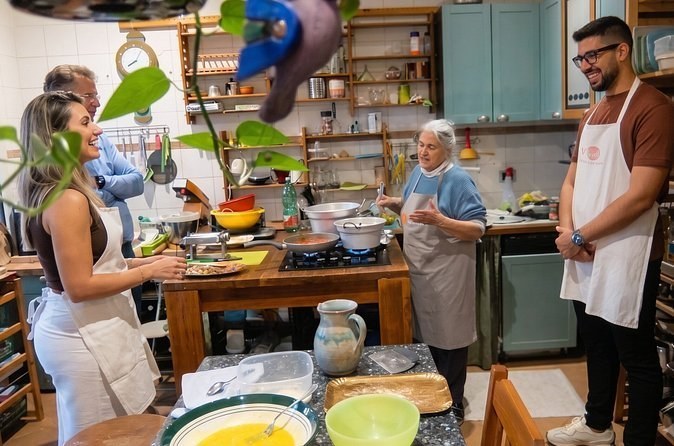
Home Cooking in Testaccio: Cacio e Pepe, Amatriciana, Carbonara
Make the three Roman sauces by hand in a flat on Via Galvani, then eat them.
From $93 per person
Check Availability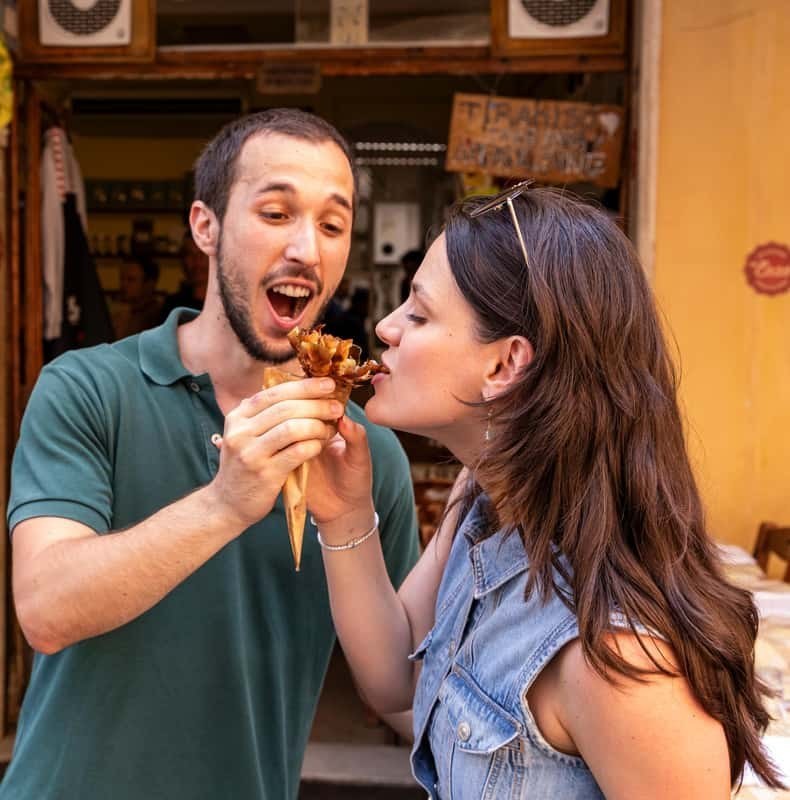
Rome: Twilight Trastevere Food Tour with Wine Tasting
Trastevere at dusk, six stops, a sit-down course and gelato.
From $120 per person
Check Availability